Root canal treatment in South Edmonton
A root canal clears infection out of the inside of a tooth so the tooth can be kept. The nerve is removed, the space is cleaned and sealed, and a crown usually goes on afterwards. It is done under freezing, and it is the treatment that stops the pain rather than causing it.
What happens
The treatment, step by step
One or two appointments, and a crown afterwards on a back tooth.
The part people worry about
Does it hurt?
This is the question every patient asks, so here is the straight answer rather than a reassuring phrase.
When it is needed
Signs the nerve is infected
An infected nerve does not settle on its own. These are the signs worth getting looked at rather than waiting out.
Deciding
Treat it, or take it out?
Removing the tooth is quicker and usually cheaper on the day. What it costs comes later, in replacing it.
A gap is never free. Replacing a tooth with a bridge or an implant usually costs more than saving it would have, so the comparison is not treatment against nothing.
Afterwards
What to expect
Most people go back to work the same day. A few things are worth knowing.
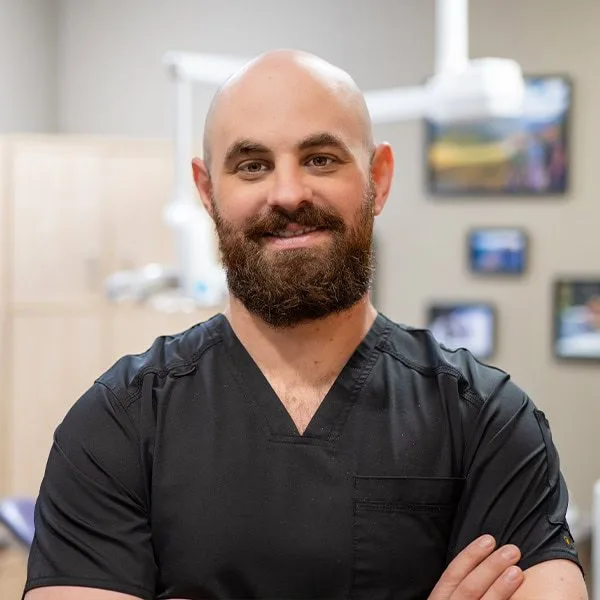 Dr. David Osborne
Ready to visit?
We're easy to reach.
780-434-8749
In Heritage Square, right next to the IDA Pharmacy
FAQ
What does a root canal cost?
We go over the quote with you before any work is done. We bill your insurer directly wherever your plan allows it. We make every attempt to work with your insurer so your plan covers as much as it can, and what a plan finally pays is the insurer's decision. The practice is a registered provider for the Canadian Dental Care Plan. There is more on fees and insurance.
Does a root canal hurt?
The tooth is frozen, so the procedure itself feels much like having a filling. Most of the pain people associate with root canals is the infection beforehand, which is what the treatment removes.
How do I know I need one?
Common signs are lingering pain after something hot or cold, pain on biting, a tooth that has darkened, or a small bump on the gum near the root. Some infected teeth cause no symptoms and are found on an X-ray.
Why does the tooth need a crown afterwards?
A treated tooth has lost internal structure and becomes more brittle, particularly a back tooth taking chewing force. A crown holds it together and prevents the kind of fracture that would mean losing it.
Is extraction not simpler?
It is faster, but removing a tooth starts a chain: the gap needs an implant, a bridge or a denture, and the bone changes shape. Keeping your own tooth is almost always the better long-term outcome where it can be saved.