2118 109 St NWHeritage Square, Edmonton 780-434-8749Call us today Opens at 8am · Free parkingMonday to Saturday Request AppointmentOr call for an emergency

Tooth extractions in South Edmonton

Direct billingCDCP registeredWho you see: Dr. Osborne

An extraction is the removal of a tooth that cannot be repaired or saved. The area is frozen first, so the procedure itself should not hurt, and most people are back to normal within a few days.

What happens

On the day

Simple or surgical, the sequence is the same and you are numb throughout.

ExaminationAn x-ray shows the shape of the roots and how close they sit to the nerve and the sinus.
FreezingThe area is fully numbed. You will feel pressure and movement, which is normal, but it should not be painful.
RemovalThe tooth is eased out. A tooth that is broken or trapped is taken out in sections, which is gentler than it sounds.
ClosingThe socket is cleaned and, where it is needed, a stitch is placed. You bite on gauze until the bleeding settles.
AftercareWe go through what to eat, what to avoid, and what to do if anything changes, before you leave.
In pain, or been told one has to come out?Request AppointmentCall 780-434-8749

What it costs

Extraction cost, without the surprise.

What an extraction costs depends on whether the tooth is straightforward or needs surgery, and on whether you are replacing it afterwards. We go over the quote with you before any work is done.

Direct billingWe bill your insurer directly wherever your plan allows it, so in most cases there is nothing for you to claim back yourself.
Only what you needWe do not add procedures to make up a number. If something can safely be watched rather than treated, we will say so and you will not be billed for it.
CDCP registeredHeritage Dental Centre is a registered provider for the Canadian Dental Care Plan, so if you are covered by it you can be seen here.
No surprise billingWe make every attempt to get the most out of your insurance plan.

When it is needed

Why a tooth comes out

Removing a tooth is the last option, not the first. These are the situations where it is the right one.

Decay too deep to rebuildOnce decay reaches past the point a filling or a crown can hold, there is nothing sound left to build on.
A break below the gum lineA tooth that has fractured under the gum usually cannot be sealed, and it will keep getting infected.
Advanced gum diseaseWhen the bone holding a tooth has gone, the tooth loosens. Removing it protects the bone around its neighbours.
Wisdom teeth with no roomThird molars that come in sideways or stay trapped press on the tooth in front and trap food and bacteria.
Crowding before alignmentOccasionally a tooth is removed to make room so the rest can be straightened properly.
Infection that keeps returningWhere a root canal has been tried and the infection comes back, removal is often the more honest answer.

Afterwards

The first 24 hours matter most

A clot forms in the socket and everything heals underneath it. Almost all of the advice below is about protecting that clot.

No straws, no smoking, no rinsingAll three create suction or disturbance that can pull the clot out. That leaves a dry socket, which is genuinely painful and needs treating.
Cold on the outside of the cheekFifteen minutes on, fifteen minutes off, for the first day. It keeps the swelling down more than anything you can take.
Soft food, and warm salt water after day oneYogurt, soup, mashed potato. From the second day, rinse gently with warm salt water to keep the area clean.
Ring us if it gets worse, not betterDiscomfort should ease each day. Pain that climbs on day three, or a bad taste with it, is worth a phone call.

Afterwards

Does it need replacing?

A gap changes how the bite meets and lets the neighbouring teeth drift. Whether to fill it depends on which tooth it was.

If
It was a wisdom tooth
Then
No replacement neededThird molars do nothing for the bite, and nothing drifts into the space.
If
One tooth, with sound teeth either side
Then
An implant or a bridgeAn implant leaves the neighbours untouched. A bridge is quicker and uses them for support.
If
Several teeth, or a whole arch
Then
A partial or full dentureReplaces many at once and is usually the least expensive way to do it.

If teeth are coming out and being replaced together, that is one treatment plan and one conversation about cost, not two.

Take it out, or try to save it?

Save the tooth

When this is the answer
  • There is enough sound tooth left to hold a repair.
  • The root is not cracked. A cracked root cannot be repaired.
  • The bone around it is healthy enough to keep holding it.
  • Your own tooth, kept, still beats anything we can put in its place.

Take it out

When this is the answer
  • The tooth is broken below the gum, so there is nothing to build on.
  • The root is cracked, or the bone around it has gone.
  • Infection keeps coming back after it has already been treated.
  • It is a wisdom tooth causing trouble and doing no work.

This is the decision the appointment is for. We will tell you which column you are in, what the repair would involve if you are in the first one, and what replacing the tooth would mean if you are in the second.
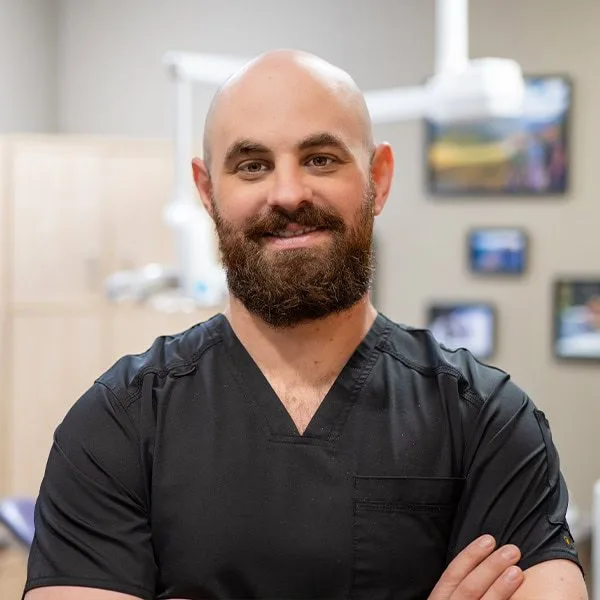
Who you will see

Who does this at Heritage

Opens at 8am, Monday to Saturday

Ready to visit?
We're easy to reach.

780-434-8749
2118 109 St NW, Edmonton, AB T6J 7C1
In Heritage Square, right next to the IDA Pharmacy
Get Directions
Request Appointment
New and returning patients, our front desk will call you to confirm availability.
Who is this for?
We use these details only to ring you back and arrange your appointment. Please do not send medical details through this form; we will go through those with you at the visit. Privacy Policy · Health information

FAQ

Can I drive myself home after an extraction?

Yes, if you have had local freezing only. It numbs the area and does not affect your judgement or your reaction time. You may still want somebody with you for a wisdom tooth or a surgical extraction, because you will be sore and tired afterwards. If anything beyond freezing is planned, we tell you before the day so you can arrange a lift.

Why would a tooth need to come out?

Common reasons are decay too extensive to restore, a tooth broken below the gum line, advanced gum disease that has destroyed the supporting bone, infection that has not resolved, or crowding where a tooth is causing damage to its neighbours.

Does it hurt?

The area is frozen before anything starts, so you should feel pressure rather than pain. Soreness afterwards is normal for a few days and is usually managed with over-the-counter pain relief.

How long does healing take?

The gum surface generally closes over within one to two weeks. The bone underneath continues to fill in for several months, which is why any replacement tooth is planned rather than placed immediately.

What is a dry socket?

A dry socket happens when the blood clot protecting the site is dislodged too early, exposing the bone. It is painful and needs to be seen. Avoiding smoking, straws and vigorous rinsing for the first few days is the best prevention.

What replaces the tooth afterwards?

Depending on the position and how many teeth are involved, the options are usually an implant, a bridge, or a partial denture. Front teeth and back teeth are planned differently.

Request Appointment Call