Children's dentistry in South Edmonton
Children are seen by the same general dentists who look after the rest of the family. The first visit is usually a look and a conversation, not treatment, and the aim is that your child is comfortable here long before anything needs doing.
The first visit
What actually happens
Short, and mostly about your child deciding this is a fine place to be.
When they arrive
The order baby teeth usually come in
The order is more useful than the dates. A tooth arriving early or late on its own is almost never the thing worth worrying about.
- Bottom front teeth 6 to 10 months
- Top front teeth 8 to 12 months
- Top side teeth 9 to 13 months
- Bottom side teeth 10 to 16 months
- First back teeth 13 to 19 months
- Pointed canine teeth 16 to 22 months
- Second back teeth 25 to 33 months
Age in months
What is normal
Teeth arriving out of order
The order varies far more than the charts suggest, and most of what worries parents turns out to be a variation rather than a problem.
At home
What makes the difference
Four things, and they matter far more than anything that happens in the chair.
It is only a baby tooth. Does it need fixing?
Treat it
- A back baby tooth is not lost until ten or twelve, so it has years of work left.
- It holds the space. Lose it early and the adult tooth comes in crooked or stuck.
- Decay does not stop at the baby tooth. It reaches the nerve, and that hurts.
- A small filling now is a short visit. An abscess at midnight is not.
Leave it
- Sometimes right, for a front tooth already loose and about to come out.
- We will say so when that is the case, rather than treat something on its way out.
- Left alone anywhere else, it usually turns into an unplanned visit in pain.
- That visit is much harder on a child than the filling would have been.
Which it is depends on the tooth and how close it is to coming out, so it is a decision we make with you at the appointment, not a rule.
 Dr. Gordon Poznikoff
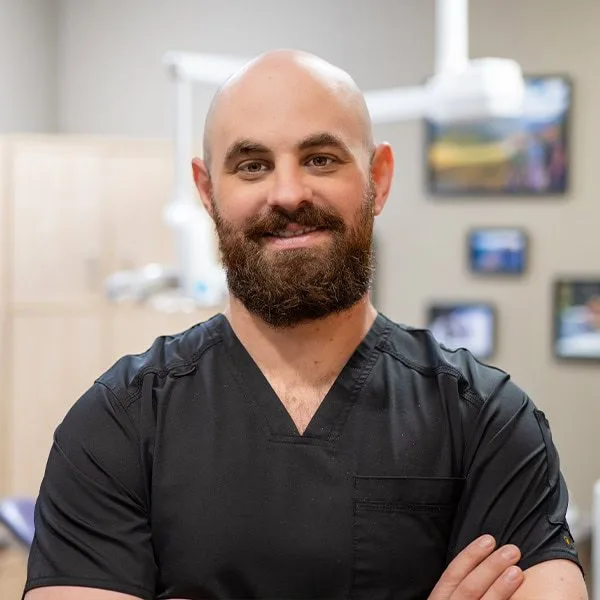 Dr. David Osborne
 Dr. Kim Tan
 Dr. Siew Tan
Ready to visit?
We're easy to reach.
780-434-8749
In Heritage Square, right next to the IDA Pharmacy
FAQ
What does a child's appointment cost?
We go over the quote with you before any work is done. We bill your insurer directly wherever your plan allows it. We make every attempt to work with your insurer so your plan covers as much as it can, and what a plan finally pays is the insurer's decision. The practice is a registered provider for the Canadian Dental Care Plan. There is more on fees and insurance.
When should my child's first visit be?
By the first birthday, or within six months of the first tooth coming through, whichever happens first. The visit is brief and largely about familiarity rather than treatment.
Do baby teeth really matter if they fall out anyway?
Yes. Baby teeth hold the space for the adult teeth behind them, and they matter for chewing and speech. A baby tooth lost early to decay can let neighbouring teeth drift into the gap, which causes crowding later.
What are sealants?
A thin protective coating painted into the deep grooves of the back teeth, where a toothbrush cannot reach properly. They are quick, painless to apply and are checked at regular visits.
How do I make it less frightening?
Keep your own language neutral. Words like hurt, needle and drill introduce a fear the child did not have. Book the appointment for a time of day when they are rested rather than tired.
How much fluoride toothpaste should a young child use?
A smear the size of a grain of rice under three, and a pea-sized amount from three to six, with an adult supervising brushing until they can do it thoroughly themselves.